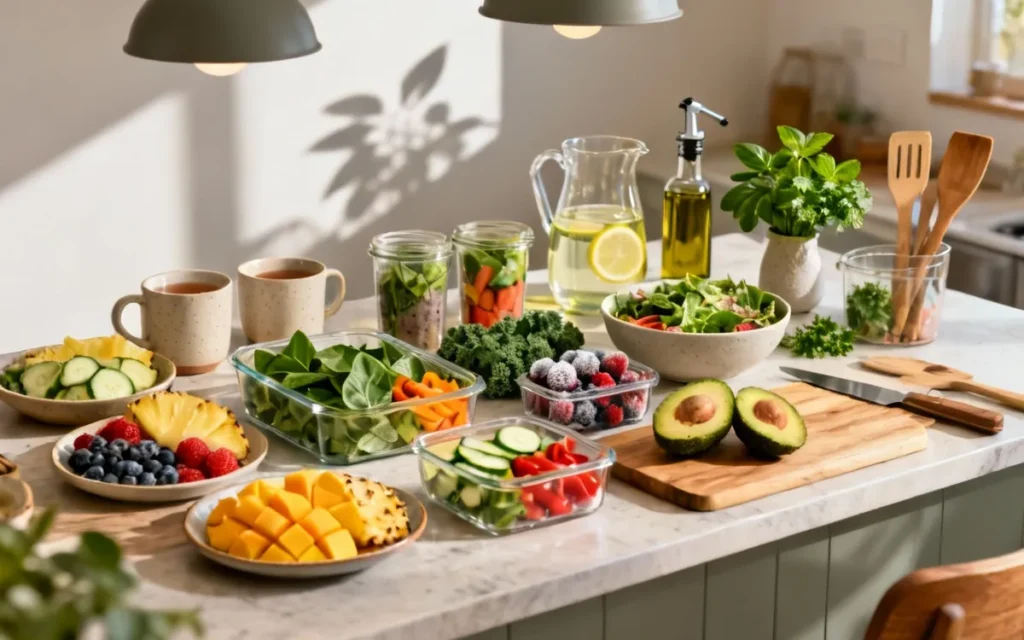
It’s 7 p.m., you’re tired and the fridge holds a few random ingredients that don’t add up to dinner. That’s usually the moment takeout wins. Meal prep fixes this by doing the thinking and chopping ahead of time, when you have the energy.
This guide to healthy meal prep for beginners keeps things simple. You don’t need fancy containers or a full Sunday in the kitchen. A short plan, one grocery trip and about two hours of prep can cover most of your weekday lunches and dinners.
Below, you’ll learn how to build balanced meals, follow a sample weekly plan, store food safely and avoid the mistakes that make people quit.
Start With a Simple Balanced Plate
Healthy meal prep starts with a basic formula you can repeat. The NHS’s eight tips for healthy eating recommend basing meals on higher-fiber starchy foods, eating plenty of fruit and vegetables, and cutting down on salt, sugar and saturated fat.
A simple way to put that on a plate is to combine these four parts:
- A vegetable or two: Roasted broccoli, peppers, carrots, green beans or a big salad.
- A protein: Chicken, fish, eggs, beans, lentils or tofu.
- A whole grain or starch: Brown rice, quinoa, whole wheat pasta or potatoes with the skins on.
- A flavor booster: A simple sauce, salsa, herbs, lemon or a spoonful of yogurt dressing.
Mixing and matching these parts keeps meals interesting without needing a new recipe every night.
Gather a Few Basic Tools
You probably own most of what you need already. Two sheet pans, a large pot, a sharp knife, a cutting board and a set of reusable containers with lids will cover almost every recipe. Glass containers are handy because you can see what’s inside and reheat food in them.
Healthy Meal Prep for Beginners: A Sample Weekly Plan
Start by prepping lunches and dinners for Monday through Thursday. Friday can be leftovers or a simple fresh meal. Here’s an example plan built from shared ingredients:
- Monday and Tuesday: Grain bowls with brown rice, roasted vegetables, chickpeas and a lemon-tahini sauce.
- Wednesday: Sheet-pan chicken or tofu with roasted potatoes and green beans.
- Thursday: Lentil soup with a side salad and whole grain bread.
- Lunches: Leftover bowls or soup, plus fruit and a handful of nuts.
Notice how the same rice, roasted vegetables and sauces appear more than once. Overlapping ingredients cut your shopping list, reduce waste and speed up prep.
Your Two-Hour Prep Session, Step by Step
Pick a time that works for you, such as Sunday afternoon or a weekday evening. Then follow this order so several things cook at once:
- Preheat the oven and start the grains. Rice and quinoa can simmer while you chop.
- Roast your vegetables. Spread them on sheet pans with a little oil and seasoning.
- Cook your proteins. Bake chicken or tofu, simmer lentils or hard-boil a batch of eggs.
- Make one or two sauces. A quick vinaigrette or yogurt sauce keeps for several days.
- Wash and cut snacks. Slice carrots, cucumbers and fruit for easy grab-and-go options.
- Cool, portion and label. Divide food into containers and note the date on each one.
Your first session may take longer than two hours, and that’s normal. As you repeat the same steps, you’ll learn which tasks can overlap and get faster each week.
Cleaning as you go keeps the kitchen manageable. Wash bowls and cutting boards while things roast, and you’ll finish with very little left to do.
Store Your Meals Safely
Food safety is an important part of meal prep. The FDA’s guide to refrigerator thermometers and food safety advises keeping your fridge at 40°F or below and your freezer at 0°F. It also says leftovers should be refrigerated or frozen within two hours.
Let hot food cool briefly, then refrigerate it in shallow containers so it chills quickly. Plan to eat refrigerated meals in the first part of the week and freeze portions meant for later. Reheat leftovers until they’re steaming hot all the way through.
Common Beginner Mistakes to Avoid
Most people who give up on meal prep try to do too much too soon. Keep these pitfalls in mind:
- Prepping every meal. Start with four or five meals, not 21.
- Cooking dishes you don’t love. Choose foods you already enjoy and simply make them in bigger batches.
- Skipping variety. Use two different sauces or seasonings so the same base doesn’t get boring.
- Forgetting snacks. Pre-cut fruit and vegetables make healthy choices the easy ones.
Good eating habits also support better rest, as we explain in our post on how to improve sleep quality. If you have a medical condition, food allergies or specific nutrition goals, talk to a doctor or registered dietitian before making big changes to your diet.
Plan Your First Week
This week, pick two recipes you already like, write a short grocery list and set aside two hours for prep. Treat it as an experiment, then keep what worked and adjust the rest. Meal prep pairs well with other everyday wellness habits that stick.
Here at PKwys.com, we focus on realistic health habits for busy lives. Find more ideas in our health section.